
Let steadiness include ease.
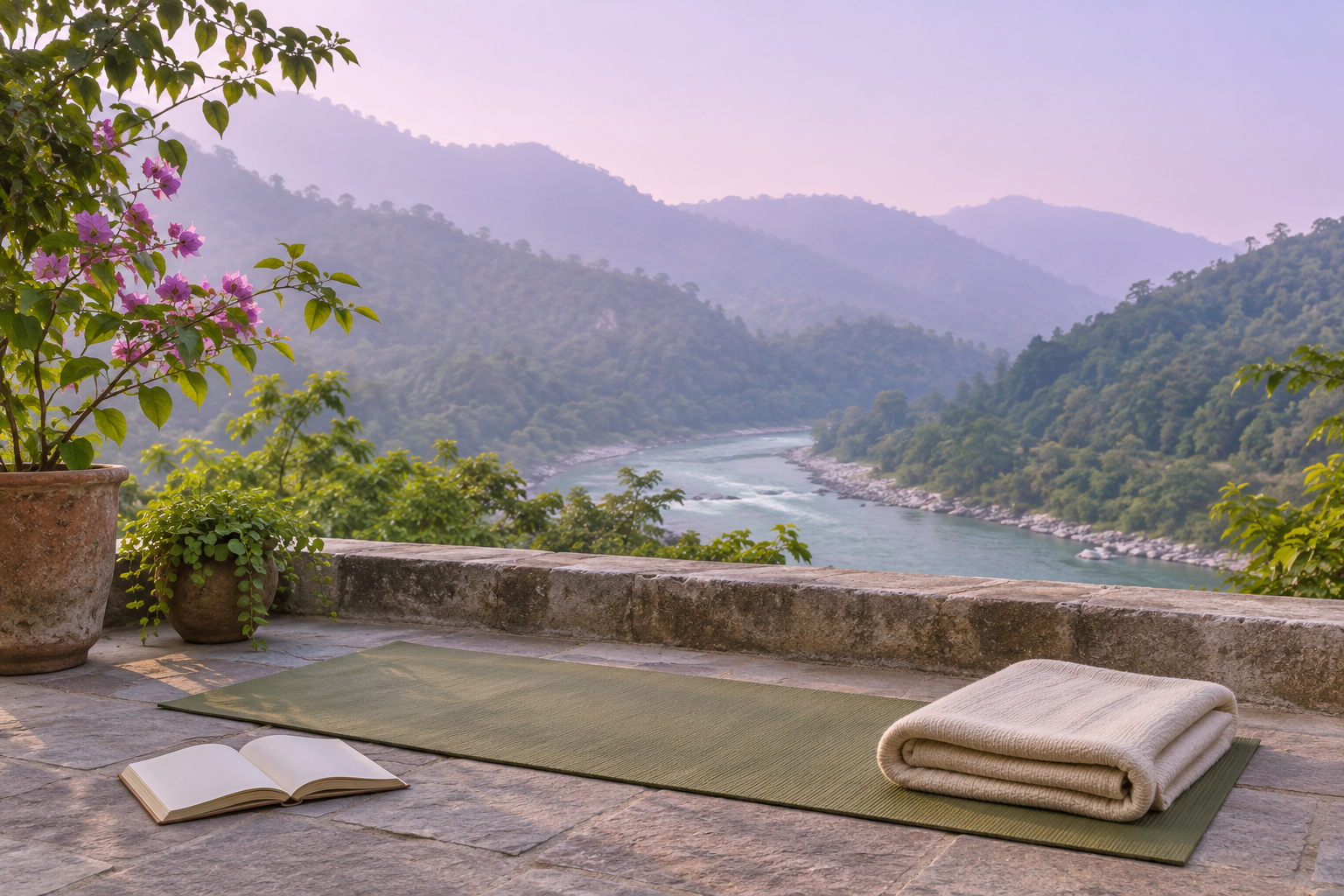
A place for yoga in an ordinary day
A steady yoga practice can begin with something quite small: a comfortable place to sit, a little time, and a willingness to notice how you are today. Work, family and changing energy levels all belong to the life in which we practise. The routine we choose needs to make room for them.
Rishikesh, in the foothills of the Himalayas, is widely known as a centre for yoga and philosophical study. Its ashrams and places of learning remind us that yoga includes patient study alongside practice. We can bring that respect for learning into a home in Brisbane, an online class, or a few quiet minutes between daily responsibilities.
I encourage you to begin with a manageable question: what kind of practice can I return to with care?
Let steadiness include ease
The Sanskrit words sthira and sukha bring together steadiness and ease. In classical Yoga, they describe qualities of a posture that supports sustained attention, particularly sitting. These qualities also offer a helpful reflection for a contemporary Hatha practice.
Try noticing how you support yourself. A chair, cushion or folded blanket may make sitting more comfortable. Let your hands rest. Check whether your jaw is clenched or your shoulders are working harder than necessary.
You can remain attentive while changing position. A stable foundation allows room for adjustment, and ease can develop when we stop demanding a shape that does not suit us today.
Get to know your ordinary breath
Before trying to change the breath, spend a short time noticing it. The diaphragm is already participating in ordinary breathing. As it contracts, it moves downward, helping create the pressure changes that draw air into the lungs. You may feel movement around the ribs, the abdomen, or both.
Allow breathing to stay comfortable. There is no need to take the deepest possible breath or hold it. If attention to breathing feels uncomfortable, notice the contact of your feet with the floor instead.
This simple observation prepares the ground for learning. Specific pranayama methods need suitable instruction, especially when they involve retention or stronger effort. Stop if you feel dizzy, distressed or short of breath, and seek medical advice for persistent or unexplained symptoms.
Choose movement that fits your body
Anatomy gives us good reasons to make room for individual differences. The spine has natural curves. Shoulder blades move as the arms rise. Hip structure and movement vary from person to person. A photograph tells us very little about the experience of the person in the posture.
When practising familiar movements, explore a comfortable range and build gradually. You might lower your arms, bend your knees, or use a stable chair for support. These choices allow you to pay attention to the movement itself.
Pain, numbness or tingling are reasons to stop and reassess. During pregnancy, after an injury, or with a health condition, ask your healthcare professional and a qualified yoga teacher about appropriate adaptations.
Make a short practice easy to return to
Choose a small period that fits naturally into your day. Prepare the space and any supports before you begin. Keep the floor clear and give yourself enough time to finish without rushing.
Start by sitting or standing comfortably and noticing your surroundings. Continue with a few gentle movements you have already learned and can practise comfortably. Leave room at the end for rest, whether seated or lying in a position that suits you. This is a simple way to organise familiar practice, rather than a sequence to learn from written instructions alone.
You may keep your eyes open during rest, move when needed, or end sooner. Afterwards, notice one thing that helped you practise. If you miss a day, begin again with the next suitable opportunity.
Keep curiosity alongside careful understanding
Traditional yoga includes teachings about prana, often understood as vital breath or life activity. These teachings belong to broader inquiries into embodied life and spiritual understanding. Their meaning deserves patient attention.
As you learn, keep traditional explanations and anatomy clear. Prana is not a scientific synonym for oxygen. A feeling of warmth or ease may be meaningful to you without proving a particular account of subtle energy.
The learning associated with Rishikesh and the Himalayan region offers an invitation to deepen our questions. Respect for yoga's Indian traditions includes taking time to understand their different ideas and purposes.
Carry the practice into the rest of your day
Ahimsa, the principle of non-harming, asks us to consider the effects of our actions. In practice, this may mean choosing a gentler option. In everyday life, it may mean listening carefully, speaking honestly with kindness, or setting a necessary boundary.
A useful reflection at the end of the day is simple: where did I respond with care, and where could I try again? Let the answer guide a small, practical choice tomorrow.
Whether your interest begins with the yoga traditions of Rishikesh, the quiet beauty of the Himalayas, or a wish to make space in a busy Brisbane day, you can start where you are. Bring attention to an ordinary breath, choose appropriate support, and allow learning to continue.
General educational reading, not personal medical advice. Adapt your practice to your circumstances and seek qualified guidance when needed.